From our inspections
From Poufs to Burner Caps: On-Site Inspection Photos Across 12 Product Types
Importers send us very different goods: garden furniture and spectacle frames, kitchenware and children's products, seasonal décor and gas burner parts. The checks change with the product. The method does not: the inspector draws the cartons across the lot, takes every sampled unit out of its packaging, lays out the full sample and checks each unit against the buyer's checklist. These photos come from our own inspections in China.
- Twelve product types from our inspections, each with a photo from the inspection
- The key checks for each type
- Links to our detailed guides for each category
Client brands, logos and order details are kept out of these photos.
One Method, Whatever the Product
- Cartons drawn by the inspector from different pallets and stack levels, at least the square root of the total number of cartons
- Every sampled unit unpacked, with the packaging checked separately
- The full sample laid out and photographed, so the count can be verified in the report
- Each unit checked against the approved sample and the buyer's checklist, with measurements taken by tool
- Each style or colour sampled as its own group when the plan requires it
The method in detail, with more photos, is in what a full AQL inspection looks like.
Twelve Product Types, Twelve Sets of Checks
1. Outdoor wire chairs
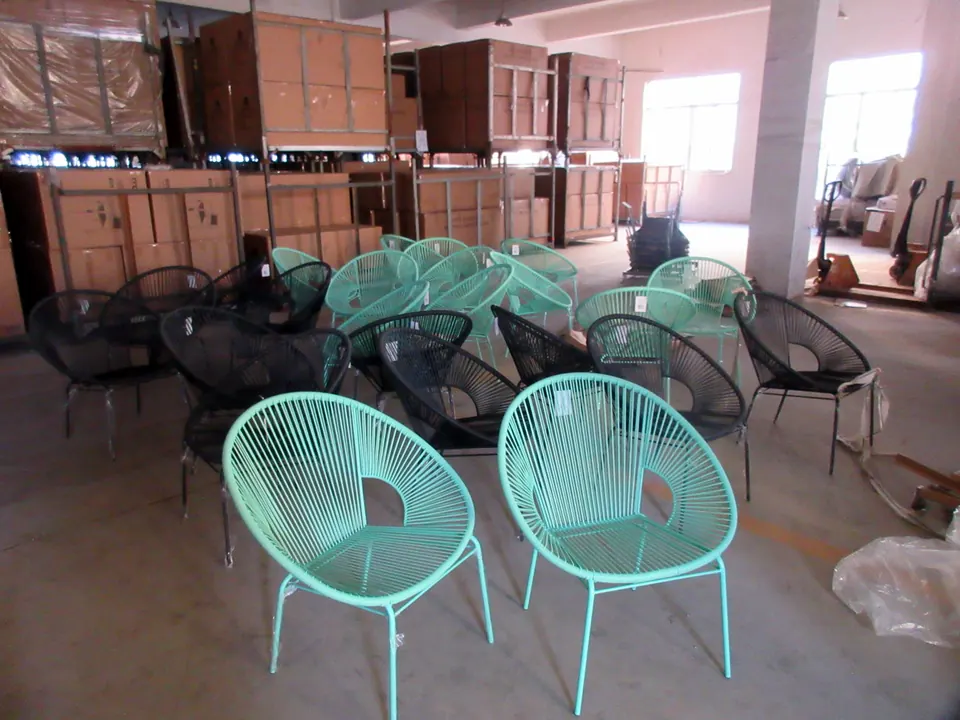
Typical checks: Welds and frame joints, coating cover and adhesion, cord tension and weave pattern, chair stability on a flat floor, a seated load check, and leg caps fitted. Colour is compared against the approved sample under daylight.
Guide: Furniture inspection in China
2. Wire stools and side tables
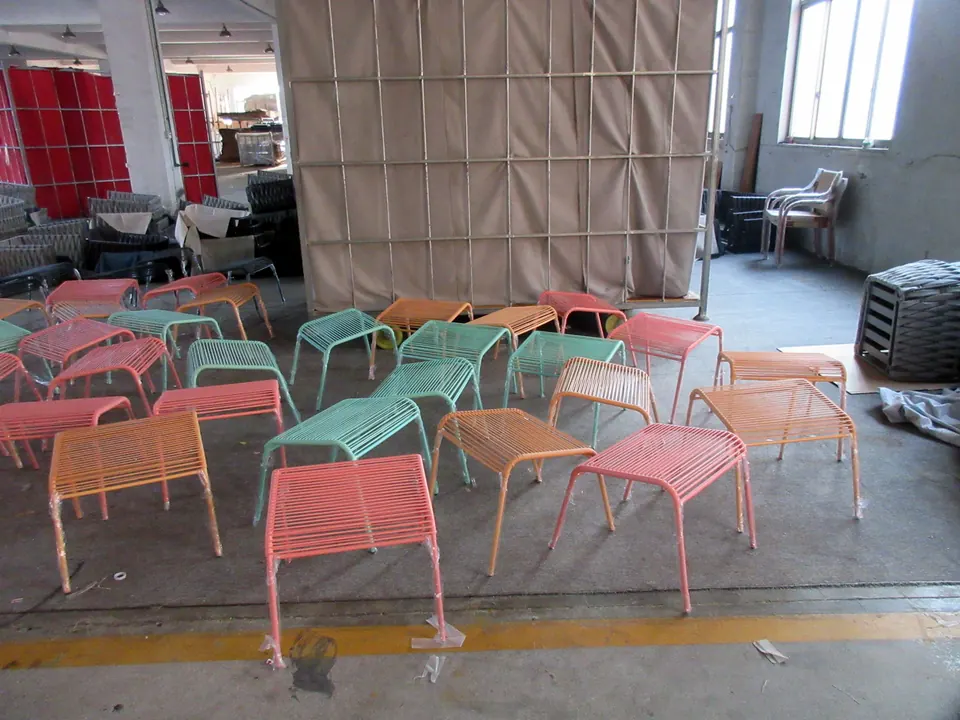
Typical checks: Level standing on all four feet, sharp ends and weld spatter, coating chips, dimensions against the drawing, and stacking if the product is sold as stackable.
Guide: Furniture inspection in China
3. Upholstered poufs
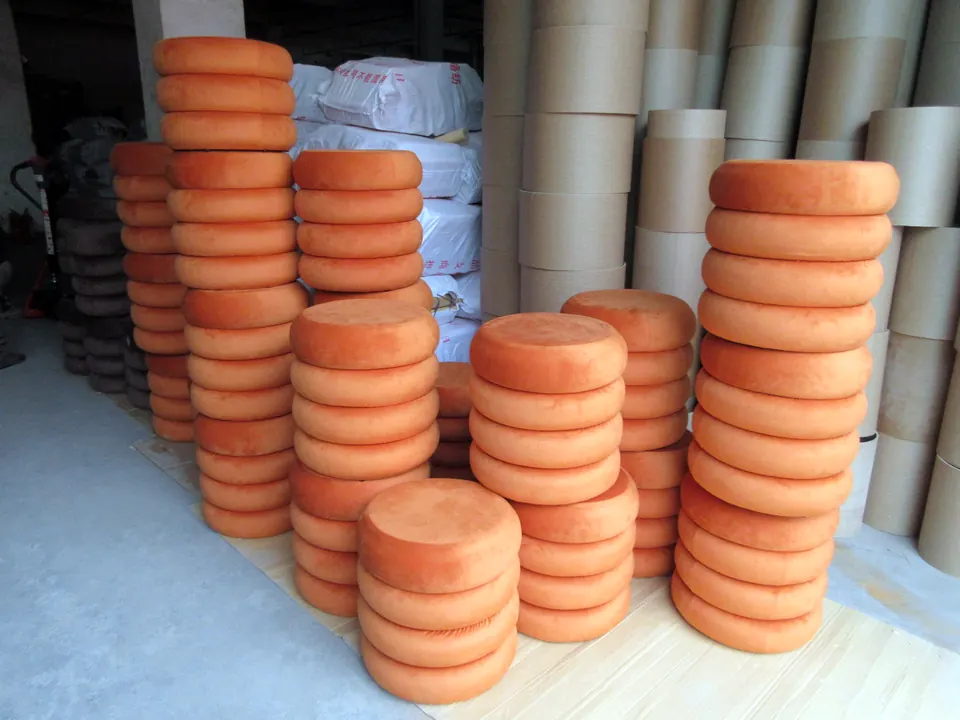
Typical checks: Fabric colour and pile direction across panels, seams and zips, shape and firmness, height and diameter, odour and stains, and the weight of each piece against the specification.
Guide: Furniture inspection in China
4. Kitchenware sets
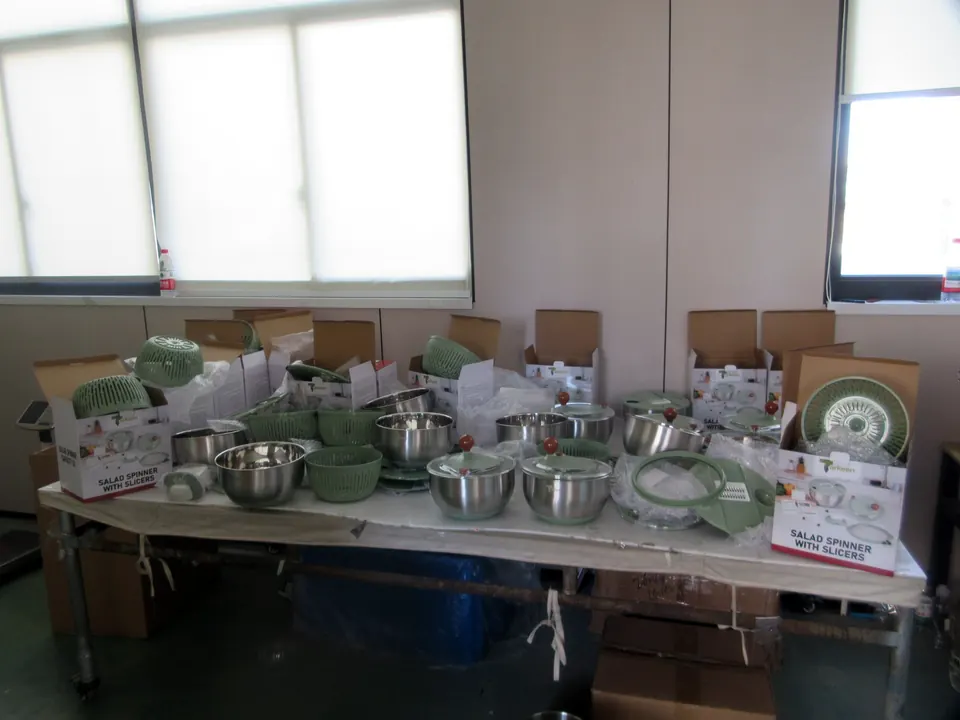
Typical checks: Set completeness against the box, spinner function, lids fit, rolled edges, polish and welds on stainless steel, and food-contact markings. Material and migration questions go to a laboratory.
Guide: Kitchenware and food-contact inspection
5. Melamine tableware
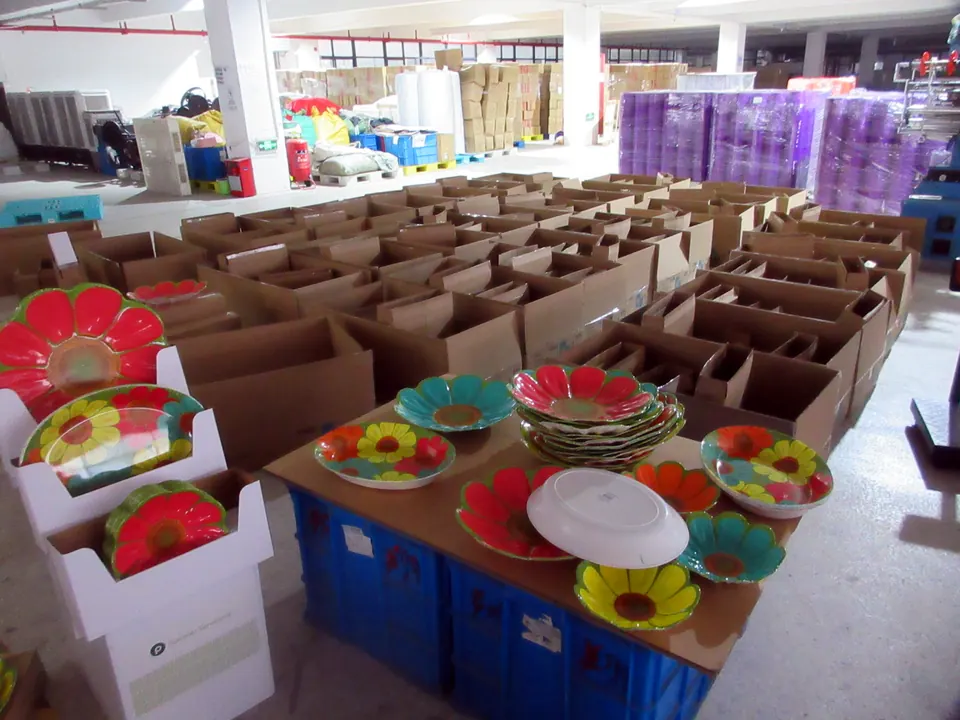
Typical checks: Print position and colour, decal bubbles and edges, warping on a flat surface, glaze and gloss, and the not-for-microwave marking where it is required.
Guide: Kitchenware and food-contact inspection
6. Eyewear
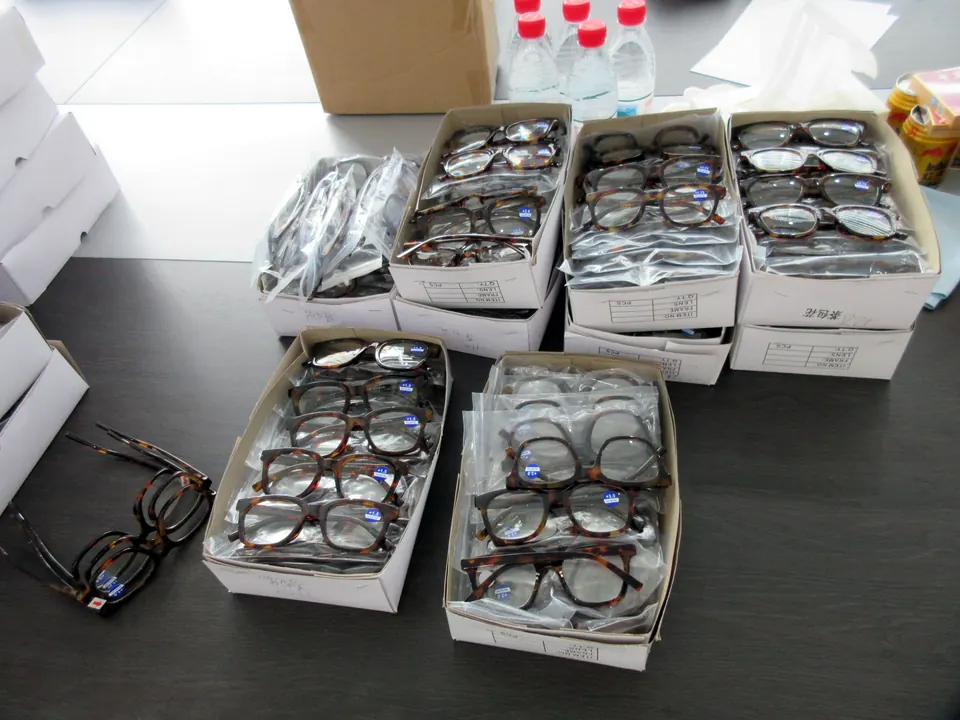
Typical checks: Hinge action and screw tightness, temple symmetry, lens scratches and coating, frame colour against the sample, and the printed size and model markings on the temple.
Guide: On-site tests during inspection
7. Wooden seasonal décor

Typical checks: Paint coverage and drips, cracks and splinters, hanging cords tied and secure, mould and moisture content, and a count of each design in a mixed assortment.
Guide: On-site tests during inspection
8. Parasol bases

Typical checks: Weight of each segment against the stated weight, cracks and casting voids, how the segments fit together around the pole, and handles and labels.
Guide: Hardware inspection in China
9. Gas burner parts

Typical checks: Dimensions that matter for fit, flame port holes clear and even, coating colour and adhesion, casting defects, and the right parts counted into each set.
Guide: Hardware inspection in China
10. Hats
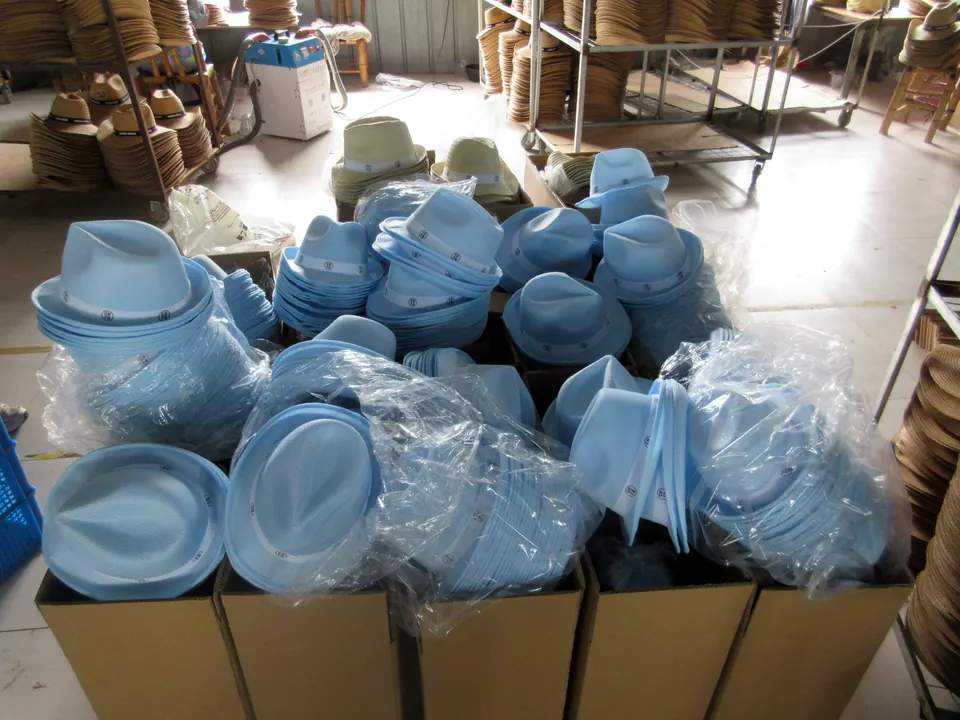
Typical checks: Shape after packing, crown and brim stitching, band and trim, size labels against the size breakdown, and colour consistency between cartons.
Guide: Garment and textile inspection
11. Children's potty seats

Typical checks: Stability and anti-slip feet, folding and locking mechanisms, sharp edges and pinch points, warning labels and age marking, and the instruction leaflet in the right languages.
Guide: EU GPSR inspection checklist
12. Footwear
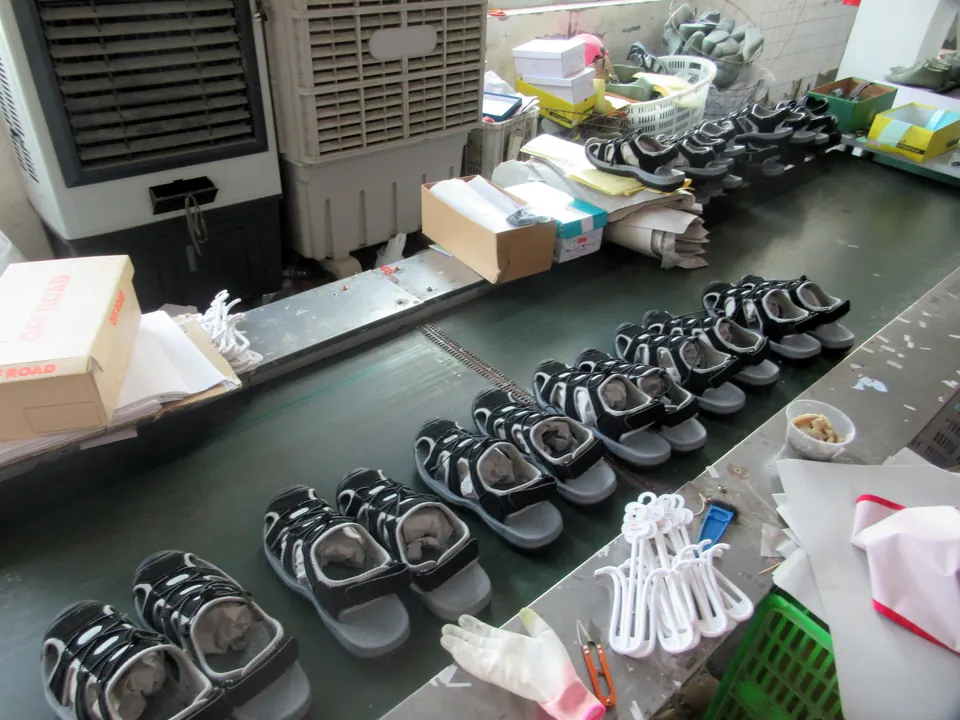
Typical checks: Left and right in the same size and colour, sole bonding, strap stitching and buckles, size markings against the carton breakdown, and symmetry within each pair.
Guide: Garment and textile inspection
What Changes From Product to Product
The sampling plan and the unpacking stay the same. What changes is the checklist: the measurements that matter, the functions to test, the markings the destination market requires and the on-site tests that make sense. Two lessons hold across all of these categories:
- Products with several parts or styles need the most care, because a missing part or a wrong colour in one style is easy to lose in a mixed sample.
- Weight and dimensions are the fastest objective checks, and they catch material substitution and short counts that a visual check cannot.
- Your checklist is what turns the method into a result for your product. See how to prepare an inspection checklist.
Related reading
- Every unit in the sample, out of the carton: what a full AQL inspection looks like
- Checked 200 or looked at 20? How a shortcut inspection moves the risk back to the buyer
- On-site tests during inspection
Inspecting a product that is not on this list?
Send us the product and your checklist when you book; the inspector nearest your factory will carry out the visit.
Book an inspection