Furniture Inspection
Furniture Inspection in China: What to Check Before Shipment
Furniture is one of the product groups where a pre-shipment inspection pays for itself most reliably, and one of the easiest to inspect badly. The defects that cost money are rarely the ones visible on the top carton: a drawer that binds once assembled, a finish that lifts under tape, a table that rocks on a flat floor, a hardware bag missing two bolts. This guide covers what a furniture inspection in China should actually check, what it cannot check, and when to schedule it.
- What the inspector needs from you before the visit
- The on-site checks that matter for furniture: dimensions, assembly, stability, finish, packaging
- What an on-site inspection can and cannot replace in lab testing
- Which inspection stage to book for a first order and for a repeat order
Why Furniture Fails Differently
Most consumer goods are finished when they leave the line. Furniture usually is not: a large share ships flat-packed and is completed by the end customer, following instructions and using hardware that was packed weeks earlier by someone who never saw the assembled piece. A panel drilled two millimetres off, a cam lock from a different batch, or an instruction diagram that skips a step all pass a visual check of the parts and only show up when the product is built.
Furniture also combines several material processes in one product — solid wood or board, veneer or paint, metal frames, upholstery, glass — each with its own failure modes, and each often handled by a different workshop or sub-supplier. And it is bulky and heavy relative to its value, so transit damage is a bigger share of the total risk than for most categories. A furniture inspection has to cover all three: the built product, the materials and finish, and the packaging that has to survive the journey.
Before the Visit: What the Inspector Needs
An inspector can only check against a standard that has been written down. For furniture, that means sending, before the visit:
- Approved sample or reference photos — the colour, gloss and texture reference the bulk is compared against. If the approved sample is at the factory, say so and ask for it to be available on the day.
- Specification sheet with overall dimensions, key internal dimensions (drawer depth, seat height, shelf spacing) and the tolerance you will accept.
- Material and finish specification — species or board type, veneer, coating system, fabric code, foam density if specified.
- Assembly instructions and hardware list as they will ship to the customer.
- Carton marking and labelling artwork, including any retailer-specific labels and warning labels.
- Test reports the supplier has provided, and the destination-market requirements that apply to the product.
How to turn those documents into a checklist the inspector can execute is covered in our guide to preparing an inspection checklist.
Dimensions and Fit
Measure more than the overall size. The dimensions that generate complaints are usually functional: a drawer that does not clear its runner, a shelf that will not sit level on its pins, a sofa that does not fit through a standard doorway because the legs cannot be removed as specified. The checklist should name the functional dimensions and their tolerance, and the inspector should measure them on assembled units, not only on loose panels.
For sets and modular pieces, check that components from different cartons actually fit each other. Doors, drawer fronts and panels produced in different batches can differ in colour or size enough to matter when they sit side by side.
Assembly Test
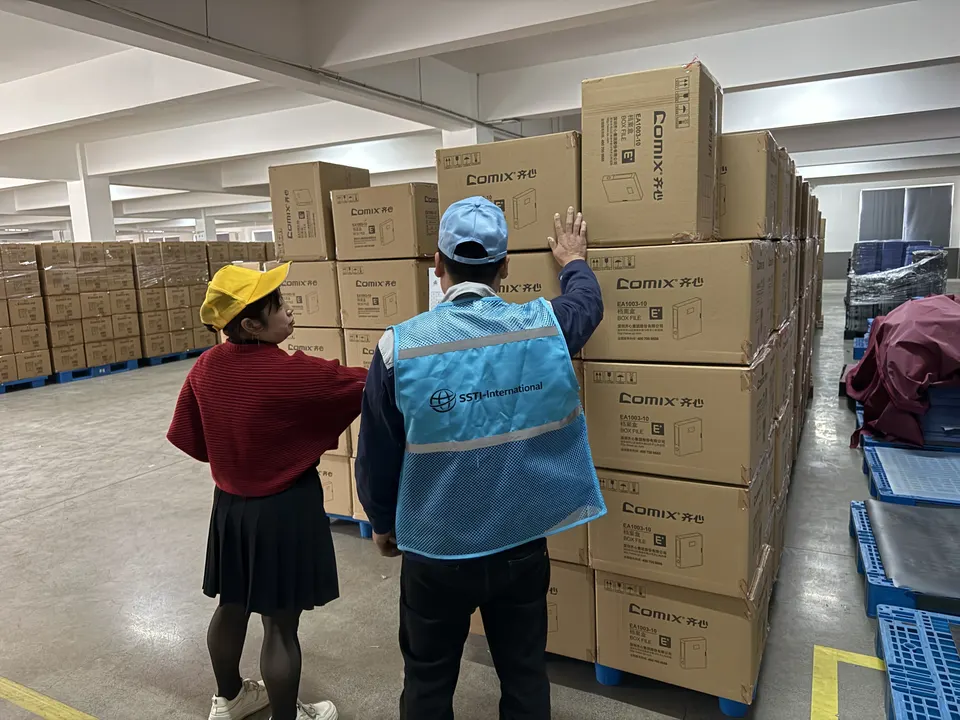
For flat-pack furniture, the assembly test is the single most informative check. The inspector takes sample units straight from sealed export cartons and builds them using only the hardware and instructions in the box. That one exercise tests hole alignment, hardware count against the list, whether the instructions are complete and in the right language, and whether an ordinary customer could actually finish the job.
Two details make the assembly test honest. The cartons should be chosen by the inspector from the packed stock, not handed over by the factory; and no tools or parts from the workshop should be used to "help" the assembly along. If the product cannot be built from what is in the box, that is the finding.
Stability, Strength and Function
On site, an inspector can check that tables and chairs stand level without rocking on a flat surface, that drawers and doors open and close smoothly through their full travel, that folding and reclining mechanisms operate and lock, and that the product withstands the simple load or stability checks written into the buyer's checklist. Casters, glides and adjustable feet should be checked for secure fixing.
Formal strength, durability and stability testing to a standard is lab work, performed on samples with calibrated equipment. The inspector's role is to confirm that the bulk is built the same way as the samples that were tested. One example of why that matters: in the United States, clothing storage units such as dressers and chests of drawers are subject to a mandatory tip-over stability standard under the STURDY Act, effective for units manufactured from September 1, 2023. Compliance is established by testing. What an inspector can check on the line is whether the production units carry the required warning label, ship with the tip restraint hardware, and match the construction of the tested sample — for example, the same drawer extension and the same back panel fixing.
Finish and Materials
Finish defects are the most common furniture complaint and the most sensitive to how the inspection is performed. Colour and gloss should be compared with the approved sample under the same light, and at the viewing distance written into the checklist, not with a lamp held against the surface. Typical findings include colour variation between panels, runs and sags, orange peel, sanding marks visible through the coating, edge banding that is lifting or poorly trimmed, and veneer bubbles.
Two simple on-site tests add a lot of information. A cross-hatch tape test on a sample panel shows whether the coating adheres to the substrate or will peel in use. A moisture meter reading on solid wood components shows whether the timber was dried properly; wood that is too wet at packing can crack, warp or grow mould in the container. The acceptable moisture range depends on the product and the destination climate, so the buyer should specify it rather than leave it to the factory.
For upholstered pieces, check seams and stitching, fabric shading between panels cut from different rolls, foam and cushion fill against the specification, and whether staples or frame edges can be felt through the cover.
Packaging and Carton Drop Test
Because furniture is heavy and ships in large cartons, packaging deserves its own section of the checklist. The inspector should verify corner and edge protection, internal separators between finished surfaces, that the hardware bag is secured so it cannot scratch panels in transit, and that carton strength is adequate for the stacking height.
A carton drop test on sealed export cartons — dropping on corners, edges and faces in a defined sequence, then opening the carton and checking the contents — is a practical way to find out whether the packaging will protect the product. Drop heights in common procedures depend on the packaged weight. A carton that survives the drop with the product intact is a far better predictor of arrival condition than any visual check of packing. Carton marks, barcodes and shipping labels are checked as covered in our guide to packaging and carton mark inspection.
What an Inspection Checks, and What Needs a Lab
An on-site inspection and a laboratory test answer different questions. Treating one as a substitute for the other is where buyers get caught out.
| Question | Checked on site | Needs a lab or documents |
|---|---|---|
| Built to spec? | Dimensions, fit, assembly from carton, hardware count | — |
| Strong and stable? | Level standing, smooth operation, buyer-specified simple load checks | Strength, durability and stability testing to a standard (e.g. tip-over testing for US clothing storage units) |
| Finish acceptable? | Colour and gloss vs. approved sample, visual defects, cross-hatch adhesion | Coating chemistry, e.g. lead in paint |
| Materials as specified? | Visual comparison, moisture meter on solid wood | Formaldehyde emissions from composite wood, fabric flammability, material composition |
| Will it arrive intact? | Packing method, carton drop test, carton marks | Full transit test programmes |
| Labelled correctly? | Warning labels, tip restraint kit, carton and product labels vs. artwork | Whether the label content satisfies the regulation |
The inspector's report should state clearly which items were checked on site and which were only verified by document. A report that simply says "compliant" without that distinction is not telling you what you think it is.
When to Inspect Furniture
For a first order with a new supplier, a during-production inspection is usually worth more than for most categories, because finish problems are visible at the spraying and assembly stage — while they can still be corrected — and nearly impossible to fix once the goods are packed. A pre-shipment inspection is then carried out when production is complete and most of the order is packed, so the sample is drawn from the real export cartons. The AQL sampling guide explains how the sample size is set.
Given the transit-damage risk, loading supervision is often justified for furniture: checking that cartons are loaded in sound condition, stacked the right way up, and not crushed under heavier cartons. For repeat orders from a supplier with a clean record, a pre-shipment inspection alone is usually proportionate.
Shipping furniture from China?
SSTI carries out production checks, pre-shipment inspections and loading supervision for furniture anywhere in mainland China.
Talk to SSTI