Tooling
Mould Ownership in China: How to Keep Control of Your Tooling
Buyers often pay thousands of dollars for injection moulds, die-casting tools or stamping dies in China, then find out the hard way that paying for a mould is not the same as controlling it. When the buyer wants to move production, the factory may claim the tooling cost was never fully paid, ask for "maintenance fees", or say the mould is worn out. In the worst cases a mould paid for by one buyer is used to make goods for someone else. This guide covers how to put mould ownership in writing and how to check tooling on site.
- Why paying for a mould does not settle who controls it
- What to put in a tooling agreement
- What an inspector can check on the mould itself
- How to move a mould to another factory
Paying for a Mould Is Not the Same as Owning It
Disputes usually start with something that was never written down. Was the tooling fee the full cost, or a contribution, with the rest recovered through the unit price? Who pays for repairs and new inserts? Can the factory use the mould for other customers? Where an invoice says only "mould fee", each side can remember the agreement differently.
A common source of disagreement is amortised tooling: the factory charges little or nothing up front and spreads the mould cost over the unit price. In that case the factory may reasonably argue that ownership passes only after a certain quantity has been ordered. If that is the deal, it should be stated, with the quantity.
This guide is general practical information, not legal advice. Ownership and enforcement of tooling agreements in China are legal questions, and a lawyer familiar with Chinese contract law should review the agreement for valuable tooling.
What to Put in a Tooling Agreement
- Ownership. The buyer owns the mould, including all cavities, inserts and spare parts, once the stated tooling payment has been made.
- Exclusive use. The mould may only be used to produce the buyer's orders, and not for any third party or for the factory's own products.
- Identification. The mould will be permanently marked with the buyer's name or code and a mould number.
- Mould life and maintenance. The expected life in shots, who pays for routine maintenance, and who pays for repair or replacement before that life is reached.
- Records. A mould list with photos, drawings where available, and the steel used for cores and cavities.
- Return. The factory will release the mould within a stated number of days of a written request, once undisputed invoices are paid, together with any spare inserts.
These points belong with the other terms in your purchase order, signed before the tooling payment is made.
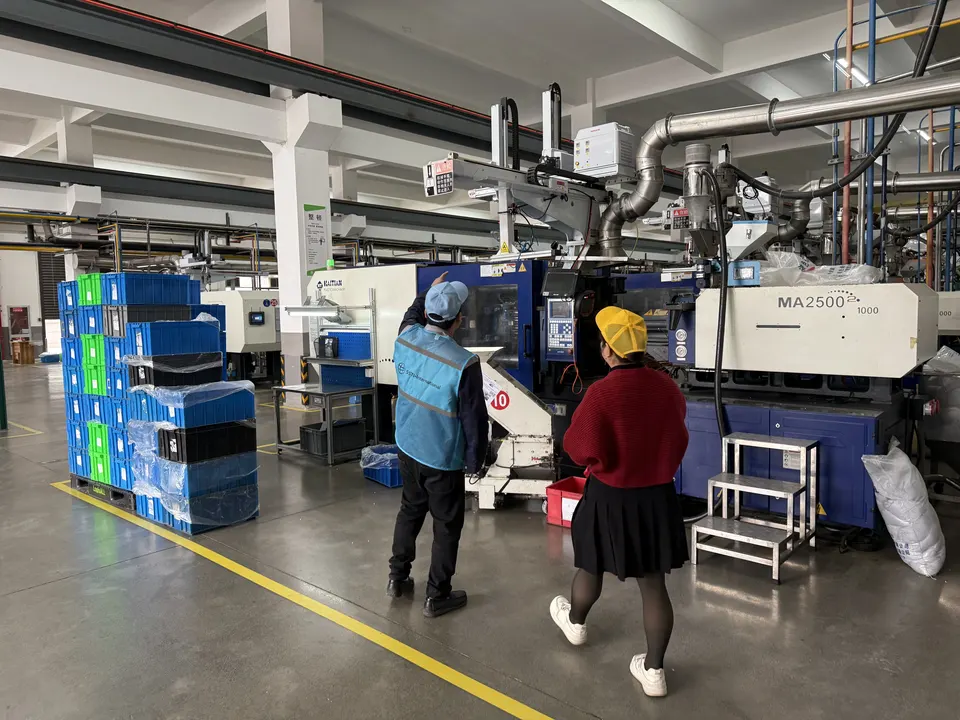
What an Inspector Can Check on the Mould
- Marking. The buyer's name or code and the mould number are engraved or stamped on the mould itself, not only on a removable plate or sticker.
- Location. The mould is at the factory named in the order, matches the mould list and photos, and is not at another workshop. Our guide to unauthorised subcontracting covers why this matters.
- Shot count. Where the mould has a shot counter, the reading is recorded at each visit. A count that rises faster than your orders explain is a question worth asking.
- Condition. Rust, damage to the parting line, worn or damaged cavity surfaces, blocked cooling channels and missing parts. Parts with flash, sink marks or short shots can point to wear.
- Storage. The mould is cleaned, protected against rust and stored safely between runs.
A check on the tooling fits naturally into an initial production check at the start of a run, when the mould is on the machine and the first parts can be compared with the approved sample.
Moving a Mould to Another Factory
- Settle any open invoices first, so there is no legitimate reason to hold the mould.
- Send a written request, citing the tooling agreement.
- Have the mould inspected and photographed before it leaves, and keep the last parts made from it as a reference.
- Make sure it is cleaned, protected against rust and packed for transport, with all inserts and spare parts.
- At the new factory, run trial shots and compare the parts with the reference samples before mass production.
An inspector on site at handover can check the mould against the mould list, record its condition and confirm that what is collected is what was paid for. See our supplier qualification and production follow-up services, or read about who you are really dealing with before you pay for tooling.
Paid for tooling in China?
SSTI can check mould marking, location, shot count and condition at the factory, and record it at handover.
Talk to SSTI