Supplier Risk
Is Your Factory Secretly Subcontracting Your Order? Warning Signs on Site
You audited the factory, saw a clean workshop and good equipment, and placed the order. But the goods may be made somewhere else. When a factory takes on more orders than it can produce, especially before peak seasons, it may pass part or all of an order to another workshop without telling the buyer. The buyer then receives goods from a site nobody has checked. This guide covers the warning signs and how to protect an order.
- Why unauthorised subcontracting happens
- Warning signs an inspector can see on site
- What to put in the purchase order
- What to do if you find it
Why It Happens
Subcontracting itself is normal in Chinese manufacturing. Many factories send out plating, printing, embroidery or moulding to specialist workshops, and that can be fine if the buyer knows and the quality is controlled. The problem is subcontracting the buyer did not agree to, where the main production moves to a site that was never verified.
It usually happens under pressure. Capacity is full, a deadline is close, and the factory does not want to lose the order or the deposit. Peak periods, such as the months before Christmas and before Chinese New Year, carry the highest risk.
Warning Signs on Site
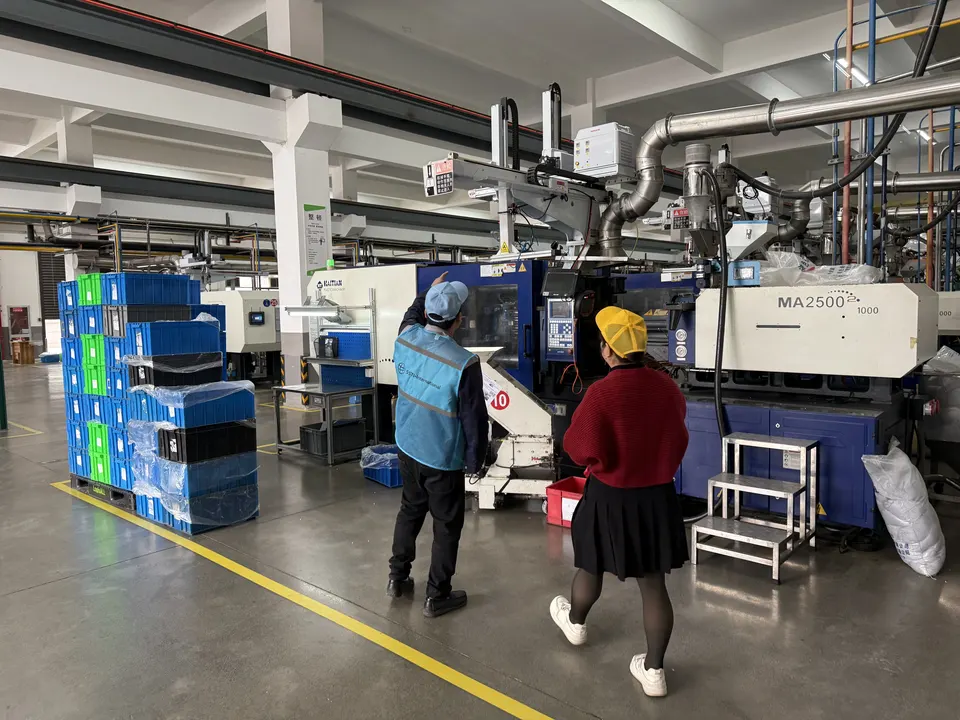
- No sign of your production. The factory says your order is in production, but the line is running other products, or there is no work in progress, raw material or packing material for your item.
- Finished goods appear without visible production. Large quantities of your product are packed, but the site has no equipment for some key process.
- Mismatched materials. Crates, pallets, bags or cartons carry another company's name, or packing lists and carton labels are handwritten or from a different format.
- Inspection away from the factory. The supplier asks for the inspection to take place at a warehouse or logistics centre, or at a different address, rather than on the production floor.
- Unusual delays and vague explanations. Delivery dates slip with explanations that do not match what the factory reported before.
- Quality that does not match the sample or past orders. A sudden change in workmanship, colour or finish can mean a different workshop made the goods.
No single sign proves subcontracting. Several together are a strong reason to ask direct questions and to visit the production floor.
Protect the Order in the Purchase Order
- Name the production site. State the factory name and address where the order must be produced, and that production elsewhere needs the buyer's written approval.
- Declare known subcontracted processes. Ask the supplier to list any outside processes, such as plating or printing, and who does them.
- Inspection access. Give the buyer's inspector the right to visit the production floor and the packing area, not only a finished-goods store.
- Inspect at the factory. Insist that inspections take place where the goods are made and packed.
A supplier verification or factory audit tells you what the factory can do. A during-production inspection confirms that your order is actually being made there. If your supplier is a trading company, our guide to telling a trading company from a factory covers the related risks.
If You Find It
Do not release the balance payment until the situation is clear. Ask the supplier to identify the other site in writing. If the goods are already made, a full inspection of the batch, or 100% sorting where defects are spread out, tells you whether they can be accepted. The options after a failed result are covered in what to do when an inspection fails. Whatever you decide, record it in writing, so the next order goes back to the site you approved.
SSTI inspectors visit the production floor, not just the warehouse, and report what they see. See our inspection services.
Want to know where your goods are really made?
SSTI inspectors check the production floor, not just the warehouse, anywhere in mainland China.
Talk to SSTI