Electrical Products
Small Appliance and Electronics Inspection in China
Small appliances and consumer electronics can pass a careful visual inspection and still be the wrong product. The problems that matter most — a failed safety test, a unit that stops working after twenty minutes, a cheaper component swapped in after the samples were approved — are invisible from the outside. An electrical product inspection has to switch the product on, test it, and open some units up. This guide covers what that involves and what to prepare.
- The documents that define what "correct" means for an electrical product
- Safety tests an inspector can perform or witness on site
- Function and run tests, and why internal checks matter most
- Markings and labelling checks for the destination market
Before the Visit: Define the Product Precisely
For electrical goods, "same as the approved sample" is not a precise enough standard. Two units can look identical and differ in the parts that determine safety and service life. Before the inspection, the buyer should send:
- The certification reports the product is sold under — for example CE test reports under the relevant EU directives, UL or ETL listing information for North America, or FCC documentation for radio and digital devices — together with the model numbers they cover.
- A critical components list, ideally the constructional data form or component list from the certification file: power cord type and gauge, plug, switch, fuse, thermal cut-out, motor or heating element, power supply, main PCB version.
- The rating label artwork: model, voltage, frequency, power, and any certification marks.
- The approved sample, with its internal construction photographed if possible.
- User manual, packaging artwork and accessory list as they should ship.
With those documents, the inspector can check the product against its certified construction rather than against its appearance. The general process of turning them into a checklist is covered in our guide to preparing an inspection checklist.
Electrical Safety Tests on Site
Two safety tests are standard at inspection for mains-powered products, performed on sample units using the factory's test equipment:
- Dielectric strength (hi-pot) test. A high voltage is applied between live parts and accessible parts for a set time to confirm the insulation does not break down. Test voltage and duration depend on the product standard and insulation class, so they should be stated in the checklist, not chosen on the day.
- Earth continuity test. For Class I products with a protective earth, the resistance between the earth pin and accessible metal parts is measured to confirm the earth connection is sound.
Because the tests use the factory's instruments, the inspector should check that each tester carries a current calibration record and verify it against a known reference before use where possible. The inspector should also look at the factory's own production-line safety testing: responsible manufacturers run hi-pot and earth tests on every unit at the end of the line. Whether that test station exists, is actually used, and keeps records says a great deal about the rest of the order.
Function and Run Tests
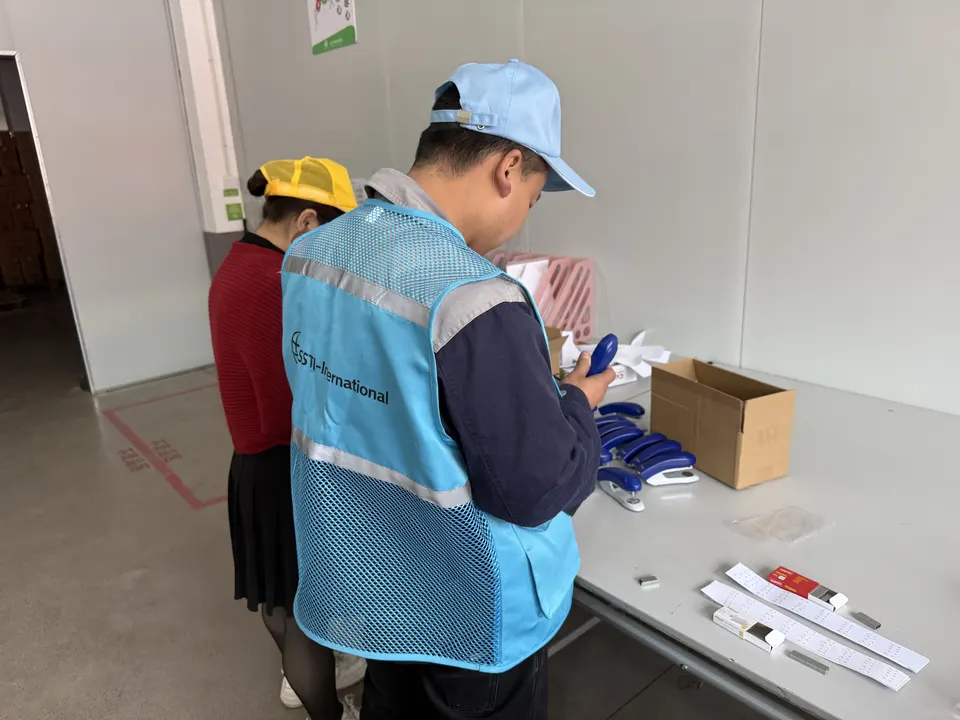
Every sampled unit should be switched on and taken through its functions: every mode, button, setting and indicator, with the accessories that ship in the box. Where the product runs continuously in use — heaters, fans, kettles, blenders, chargers — a run test of a defined duration on a smaller number of units reveals faults a quick switch-on does not: overheating, intermittent cut-outs, rising noise, smells, or a thermal cut-out that trips too early.
It is also worth measuring the power input under load and comparing it with the rating label. A large deviation points to a different element, motor or component from the one specified.
Internal Check: Where Hidden Changes Show Up
The most valuable single check on an electrical product is opening one or two units and comparing the inside with the critical components list and the approved sample. This is where a thinner power cord, a different switch, a missing fuse, an uncertified power supply, a changed PCB, or poor internal wiring and soldering become visible.
Component substitution is rarely announced. A supplier facing a shortage or a price rise may use a different part that looks equivalent and functions on the day, without appreciating that the certification only covers the listed components. The unit still works, and the paperwork still looks valid, but the product no longer matches its certification. An internal check is the only way to find this before the goods leave the factory.
| Component | What is compared |
|---|---|
| Power cord and plug | Type, conductor size, markings, strain relief |
| Switch, fuse, thermal cut-out | Manufacturer, model and rating vs. the certified list |
| Heating element or motor | Rating, markings, fixing |
| Power supply / adapter | Model and certification marks vs. the certified list |
| PCB | Version marking, component population, soldering quality |
| Internal wiring | Routing away from hot and sharp parts, insulation, secure connections |
Markings, Labels and Destination Rules
Markings are checkable on site and are a frequent cause of problems at the destination. The inspector should check that:
- The rating label is present, durable, legible, and matches the certified ratings and model number.
- Certification marks printed on the product correspond to certification that actually covers this model. A printed mark is not proof of certification.
- The plug type, voltage and frequency match the destination market.
- For the EU, the crossed-out wheeled bin symbol for electrical waste is present where required, and the product or its packaging carries the manufacturer's details and, where applicable, the EU-based responsible economic operator required under the General Product Safety Regulation, which has applied since December 13, 2024.
- For portable devices sold in the EU that fall under the common charger rules, the charging port is USB-C as required.
- The user manual and safety instructions are included in the languages of the markets the goods are sold in.
For products containing lithium batteries, the inspector can also check that the battery matches the specification in the battery's transport test documentation, since shipping lithium batteries depends on it.
What an Inspection Checks, and What Needs a Lab
| Question | Checked on site | Needs a lab or documents |
|---|---|---|
| Electrically safe? | Hi-pot and earth continuity on sampled units; production-line test station and records | Full safety evaluation to the product standard |
| Works properly? | Function test on every sampled unit, run test on a subset, power input | Endurance and life testing |
| Built as certified? | Internal check against the critical components list | Certification of the design itself |
| Electromagnetic and radio compliance | — | EMC and radio testing |
| Restricted substances | — | Chemical testing |
| Marked and labelled correctly? | Rating label, marks, plug type, symbols, manuals vs. artwork | Whether the certification actually covers the model |
When to Inspect
For a new product or a new supplier, an initial production check is the best moment to confirm the component list: once the parts are fitted into thousands of units, a substitution is expensive to undo. A pre-shipment inspection then covers function, safety tests, internal checks and markings on finished, packed goods, with safety failures classified as critical under defect classification. For repeat orders, keep the internal check in every pre-shipment inspection — it is the check most likely to find a change nobody told you about.
Buying appliances or electronics from China?
SSTI runs function, safety and internal component checks against your certification documents before the goods leave the factory.
Talk to SSTI