Cosmetic Packaging
Cosmetic Packaging and Plastic Parts Inspection in China
Cosmetic packaging is judged by the consumer at arm's length, on a shelf or in a bathroom, and small flaws matter. A sink mark on a lipstick case, a pump that takes ten strokes to prime, or a jar that leaks in transit can turn a good formula into a returned product. Inspecting bottles, jars, pumps, tubes and compacts means checking appearance against a clear standard and testing function. This guide covers both.
- How to define a cosmetic appearance standard
- Common moulding and decoration defects
- Function tests for pumps, caps and containers
- What the filler and the lab must check
Define the Appearance Standard First
"No visible defects" cannot be inspected consistently, because everything is visible under enough light and close enough inspection. A workable standard defines:
- Surface zones. For example, the main display face (zone A), secondary surfaces (zone B) and areas hidden in use, such as the base (zone C), with stricter limits for zone A.
- Viewing conditions. The light source, viewing distance and viewing time the inspector uses. Inspecting at the distance a consumer sees the product gives realistic results.
- Limits. The size and number of specks, scratches or marks allowed in each zone.
- Colour reference. An approved colour sample or standard, compared in a light box under the specified light.
Write these into the inspection checklist and the defect classification before production, and share them with the supplier.
Common Moulding and Decoration Defects
- Sink marks: shallow depressions over thick sections.
- Flash: thin excess plastic at the parting line or around inserts.
- Short shots: incompletely filled parts.
- Weld lines and flow marks: visible lines where plastic fronts meet or flow.
- Silver streaks, black specks and contamination in the material.
- Scratches and scuffs, often from handling and packing rather than moulding.
- Decoration faults: misaligned or incomplete printing, hot stamping gaps, uneven metallisation or coating.
Moulding defects often trace back to the tool or process settings. A check when the first parts come off the mould, as part of an initial production check, catches them before thousands are made. Mould condition and ownership are covered in our guide to tooling ownership.
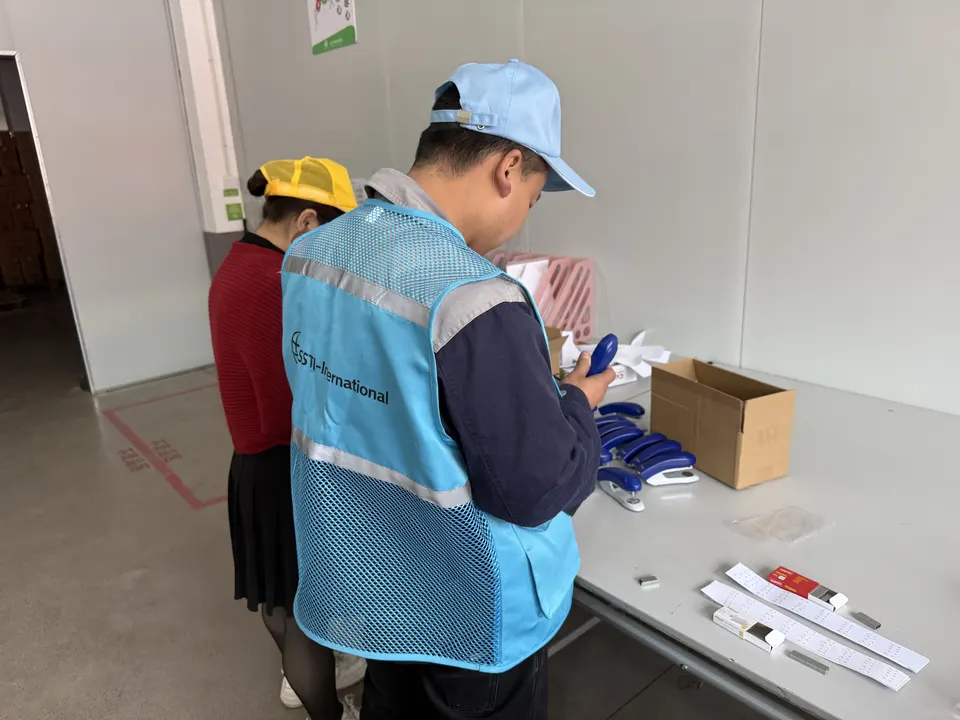
Function Tests
- Leak test. Containers are filled with water or a test liquid, closed and placed in a vacuum chamber or turned upside down for a set time, then checked for leaks. The vacuum level and time should be agreed in advance.
- Cap torque. Application and removal torque are measured with a torque meter on screw caps and closures, so caps are tight enough to seal but can still be opened by hand.
- Pump and spray output. The number of strokes to prime and the output per stroke, weighed on a scale, are compared with the specification. Spray pattern is checked for sprayers.
- Fit and assembly. Caps, lids, inner plugs and over-caps fit and snap properly. Lipstick and stick mechanisms turn smoothly and fully.
- Print and decoration adhesion. A tape test on printing and hot stamping, and a rub test where products will be handled with oily or alcohol-based contents.
- Drop test. Filled or empty components dropped from a set height, where specified, to check for cracking.
The general approach to these tests is in our guide to on-site inspection tests.
What the Filler and Lab Must Check
Packaging is only half of the finished product. Compatibility between the packaging and the formula, migration from packaging into the product, and long-term stability are tested by the brand, the filler or a laboratory, usually over weeks. Labelling of the finished cosmetic, such as ingredient lists and the responsible person under EU cosmetics rules, is the brand's responsibility. An inspection of empty components can still check that printed information matches the approved artwork.
SSTI can inspect cosmetic packaging against your zone standard and function tests as part of a product inspection.
Sourcing cosmetic packaging from China?
SSTI inspects bottles, jars, pumps and closures against your appearance zones and function tests before shipment.
Talk to SSTI