US Customs
US Country of Origin Marking: What Inspectors Check Before Goods Leave China
Many factories print "Made in China" on the export carton and assume that is enough. For goods imported into the United States it usually is not. US law requires imported articles to be marked so that the ultimate purchaser can see where they were made. A marking error found at the port can mean a hold, re-marking under customs supervision, or extra duty. These are checkable before the goods leave the factory. This guide covers what the rules require and what an inspector checks.
- What US country of origin marking requires
- The three levels an inspector checks: product, retail package, carton
- Permanence and legibility checks on site
- US place names and "Designed in" claims
What the Rule Requires
Under 19 U.S.C. 1304 and the regulations in 19 CFR Part 134, every imported article of foreign origin, or its container where the article itself cannot be marked, must be marked with the English name of the country of origin. The mark must be in a conspicuous place, legible, and as indelible and permanent as the nature of the article allows. The test is whether the ultimate purchaser in the United States, usually the consumer, can see it. There are exceptions, such as articles that cannot be marked, but they are specific and should be checked before relying on them.
Goods that arrive without a proper marking can be held until they are marked, exported or destroyed under customs supervision. The law also provides for an additional duty on goods that are not properly marked. Re-marking a container in a US warehouse costs far more than getting it right in the factory.
This guide is general information, not legal advice. For a specific product, a customs broker or a CBP ruling is the right source.
Three Levels to Check
- The product itself. Where the article can be marked, it should be: moulded, engraved, printed or on a durable label. The mark should be where a purchaser would look for it.
- The retail package. Where the consumer buys the item in a box, blister or bag, the package must show the origin clearly, especially if the product inside cannot be seen.
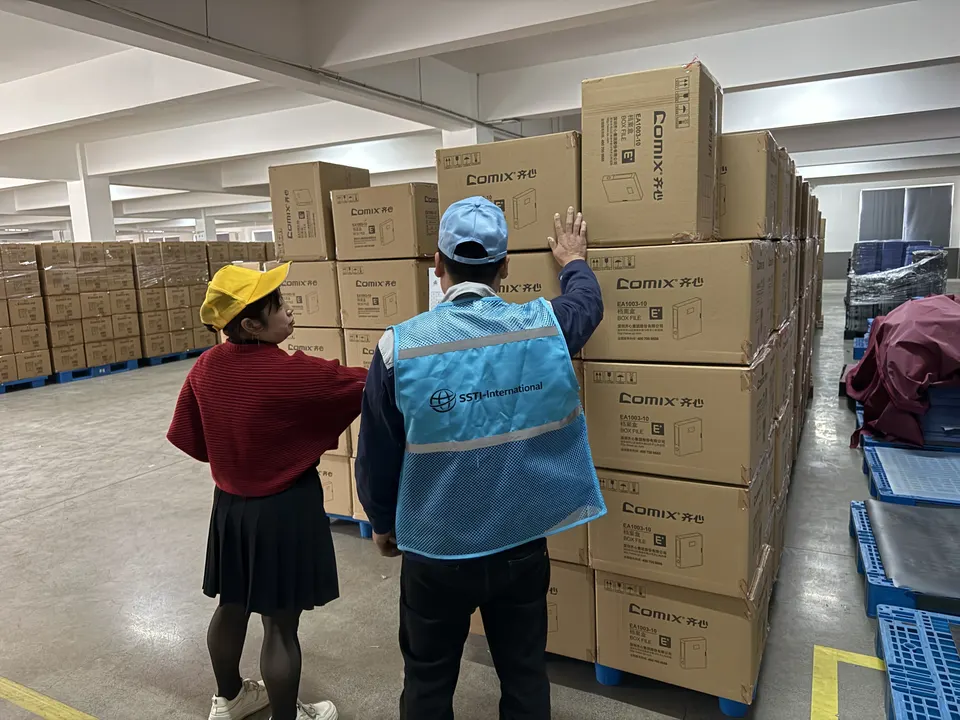
- The export carton. Master cartons carry the origin in the shipping marks. This matters for customs, but on its own it does not satisfy the requirement for the ultimate purchaser if the cartons are opened and items sold individually.
Permanence and Legibility
A mark that falls off before the item reaches the consumer does not do its job. On site, the inspector can check:
- Adhesion. A tape test on printed marks and a peel check on stickers.
- Rub resistance. Rubbing printed marks to see if they smear or wear off.
- Legibility. Size and contrast, and whether the mark is hidden by packaging, labels or folds.
- Consistency. Every sampled unit is marked, not only the first cartons.
Labels and carton marks are covered in more detail in our guide to packaging and carton mark inspection.
US Place Names and "Designed in" Claims
If the product or package shows a US place name, such as a brand address, "USA" or "Designed in California", in a way that could mislead the purchaser about origin, 19 CFR 134.46 requires the country of origin to appear close by and in comparable size, preceded by words such as "Made in" or "Product of". This is a common error on packaging designed overseas and printed in China. The inspector should compare the artwork with the printed packaging and flag any US name that is not matched by a clear origin marking.
Add Origin Marking to the Checklist
Write the required marking for each level into the inspection checklist: the exact text, where it goes, the method and minimum size. Treat a missing or non-permanent origin mark as a major defect in the defect classification, since it can stop the shipment at the port. SSTI checks origin marking at all three levels as part of a pre-shipment inspection.
Shipping to the United States?
SSTI checks origin marking on products, retail packaging and cartons as part of every pre-shipment inspection.
Talk to SSTI